Yes, you can get a mortgage in Dubai without being a resident. Banks that publish terms for non-residents lend up to 50% of the value, over terms of up to 25 years. The Central Bank of the UAE sets the limits for everyone: 80% on a resident expatriate’s first home up to AED 5 million, 60% on a second home or investment and 50% on an off-plan purchase. Repayments cannot exceed half your income. With off-plan, it fits best for the handover payment.
In this guide7 sections
| Case | Maximum that can be financed |
|---|---|
| Resident expatriate, first home up to AED 5 million | 80% |
| Resident expatriate, first home above AED 5 million | 70% |
| Resident expatriate, second home or investment | 60% |
| Off-plan purchase, any buyer | 50% |
| Non-resident | Set by each bank; those that publish it, up to 50% |
Can a non-resident get a mortgage in Dubai?
Yes. Several UAE banks have mortgages for people who live abroad and buy in Dubai as an investment or second home. Each bank decides based on your income, your history and the property, within the Central Bank of the UAE rules that apply to everyone:
- Repayments on all your debts cannot exceed 50% of your income, and the bank tests them at a rate 2 to 4 points above the real one.
- If the home is to let, the bank deducts at least two months’ rent a year.
- The maximum term is 25 years.
- An expatriate can borrow at most seven times their annual income.
- The maximum age at the end of the loan is set by each bank. Some set it at 65.
The share of the property’s value you can borrow is the LTV. For non-residents, banks that publish it lend up to 50%, so expect to put in at least half from your own funds.
Mortgages on an off-plan purchase
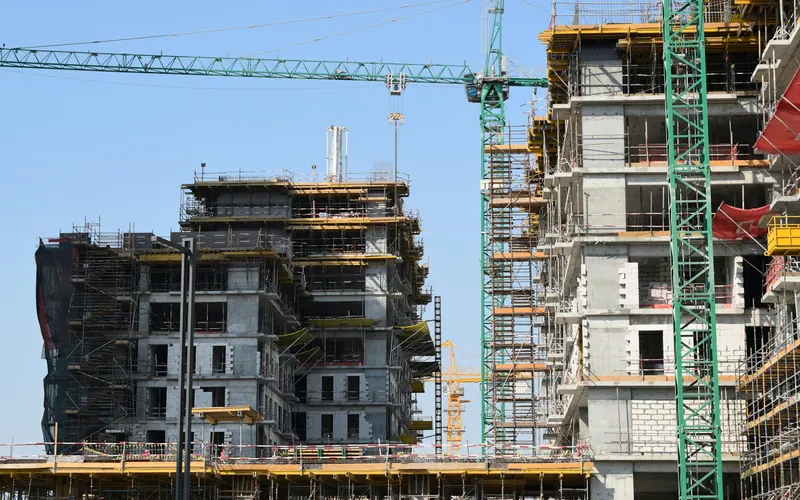
While the home is under construction, the limit is 50% for any buyer. Some banks lend during construction and others only once the home is finished, so it depends on the bank.
That is why, with off-plan, the mortgage usually comes in at handover. During construction you pay through the developer’s payment plan, and the large handover payment can be financed. On a 60/40 plan, the 40% at handover is within the limit banks publish for non-residents.
| Case | AED | € | $ |
|---|---|---|---|
| Resident, first home, 80% | AED 800,000 | €193,907 | $217,835 |
| Resident, second home or investment, 60% | AED 600,000 | €145,430 | $163,376 |
| Non-resident, at banks that publish it, 50% | AED 500,000 | €121,192 | $136,147 |
| Off-plan, any buyer, 50% | AED 500,000 | €121,192 | $136,147 |
Approximate figures, for illustration only.
The bank values the home before approving the loan. If the valuation comes in below the price, the percentage applies to the valuation and you cover the difference. It pays to get a pre-approval a few months before handover.
If you want a mortgage from day one, compare both options first in the guide to off-plan vs ready property in Dubai.
What banks ask for
Documents vary from bank to bank, but you will nearly always need:
- A valid passport.
- Bank statements for the last three to six months.
- Proof of income: payslips or an employer letter if you are employed, or company accounts if you are self-employed.
- A credit report from your country, if the bank asks.
- The property documents: the SPA and the Oqood registration.
Some banks set a minimum income, for example AED 15,000 a month, about €3,600 or $4,100.
Many banks open an account in your name to collect repayments. We explain how it works in the guide to opening a UAE bank account as a non-resident. The loan is usually signed in person in Dubai. If you cannot travel, it can be signed through a power of attorney, if the bank accepts it.
What a Dubai mortgage costs
On top of interest, allow for these costs:
- DLD registration. 0.25% of the loan amount, plus AED 250 for the title and AED 20 in fees. See mortgage registration in the glossary.
- Trustee office. AED 4,000 plus VAT for processing the registration, or AED 5,000 plus VAT if the home is still under Oqood.
- Valuation. Charged by the bank. One bank that publishes its tariff charges AED 2,625 including VAT.
- Arrangement fee. Set by each bank.
- Insurance. Banks require life and property insurance.
- Early repayment. The Central Bank caps the fee at 1% of the outstanding balance, up to AED 10,000.
An example with an off-plan home of AED 1,000,000, a 60/40 plan and the 40% handover payment financed:
| Item | AED | € | $ |
|---|---|---|---|
| Loan for handover, 40% | AED 400,000 | €96,954 | $108,918 |
| Monthly payment over 20 years at an example rate of 4.5% | AED 2,531 | €613 | $689 |
| DLD mortgage registration, 0.25% plus AED 270 | AED 1,270 | €308 | $346 |
| Trustee office, from AED 4,000 plus VAT | AED 4,200 | €1,018 | $1,144 |
| Bank valuation | AED 2,625 | €636 | $715 |
| Arrangement fee, if the bank charges 1% | AED 4,000 | €970 | $1,089 |
Approximate figures, for illustration only.
The interest rate depends on the bank, the term and whether it is fixed or variable. To see what you pay at each stage of your plan before handover, use the off-plan calculator.
Applying from the UK or the US
The rules in Dubai are the same for everyone. What changes is the currency you earn in, how you prove your income and what you declare at home.
How to get a Dubai mortgage from the UK
If you earn in pounds, the dirham repayment moves with the pound-dollar rate, because the dirham is pegged to the dollar. The bank will ask for payslips or your tax returns, statements and sometimes a credit report. To sign remotely, a power of attorney is legalised in a chain, as the UAE is not party to the Apostille Convention. UK residents normally pay tax on foreign rental income and report it through Self Assessment. Dubai is 4 hours ahead in winter and 3 in summer.
How to get a Dubai mortgage from the US
If you earn in dollars there is no currency risk: the dirham has been pegged to the dollar for decades and the repayment does not move with the exchange rate. The bank will ask for statements, tax returns or payslips and sometimes your credit report. Rental income goes on your federal return to the IRS, and if you open a UAE account and your foreign accounts add up to more than $10,000, you file an FBAR. New York and Miami are 9 hours behind in winter and 8 in summer.
From anywhere else
The requirements in Dubai are the same. Allow for your currency against the dollar and check with your adviser how your country treats a property and a loan abroad.
Things to keep in mind
- As a non-resident, plan to put in at least half the price.
- With off-plan, plan the mortgage for handover and pay construction through the plan.
- Get pre-approval a few months before handover.
- Work out the repayment at a higher rate than today’s, as the bank does.
- Add the 0.25% DLD fee, the trustee office, the valuation and insurance.
- If you earn in a currency other than the dollar, allow for the exchange rate.
- Have another way to pay the handover in case the bank approves less than expected.
If you want to finance the handover, we factor it in when choosing the project and the payment plan, help you gather what the bank asks for and coordinate the DLD registration, also if you are outside Dubai.
Frequently asked questions
Can I get a mortgage in Dubai as a non-resident?
Yes. Several UAE banks lend to non-residents. Those that publish their terms lend up to 50% of the value, over up to 25 years.
Can I get a mortgage on an off-plan property?
Yes, up to 50%. It depends on the bank: some lend during construction and others only once the home is finished, and financing the handover payment is the most common route.
How much does it cost to register a mortgage in Dubai?
0.25% of the loan plus AED 270 in DLD fees, and AED 4,000 plus VAT at the trustee office.
Can I get a Dubai mortgage from the UK?
Yes. Expect to provide payslips or tax returns, statements and sometimes a credit report. If you earn in pounds, the repayment moves with the pound-dollar rate.
Can I get a Dubai mortgage from the US?
Yes, and earning in dollars there is no currency risk, as the dirham is pegged to the dollar.